

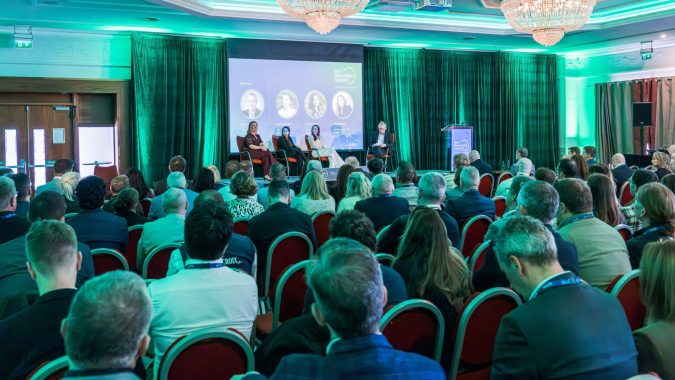
Innovation Summit 2026: Turning innovation into business impact

More than 200 business leaders, innovators, investors and entrepreneurs gathered in Cork for the second annual Innovation Summit to explore what it takes to keep Irish businesses competitive, translate technology into tangible results and turn opportunities into sustainable growth. Held at the Clayton Hotel Silver Springs on 9 October, the Innovation Summit 2026 brought together perspectives from across business, technology, investment and enterprise to address a shared challenge: how can Irish businesses turn innovation into measurable business value? Across a packed morning of discussion, presentations and conversations, a clear message emerged. Innovation is not simply about adopting new technology or generating ideas. It is about bringing the right people and partners together to deliver results, identifying the right opportunities, making informed decisions and developing the capabilities to act Strengthening Ireland’s competitiveness The Summit opened with a look at Ireland’s position in an increasingly competitive European and global economy, setting the context for the discussions that followed. Ireland has an opportunity to strengthen its position in a more competitive Europe. Realising that opportunity will require businesses to continue embracing innovation, continue building capabilities and translating the potential of emerging technologies into tangible economic and business results. For individual businesses, competitiveness is increasingly linked to how effectively they respond to changing customer expectations, improve efficiency, develop new products and services, and nurture new market opportunities. Technology is an important part of that equation, but it is not a strategy in itself. Businesses need to be clear about the problems they are trying to solve, where technology can make a measurable difference and how success will be evaluated. AI: From potential to practical application Artificial intelligence featured prominently throughout the Summit, reflecting both the scale of the opportunity and the questions businesses are grappling with as adoption accelerates. AI offers opportunities to improve efficiency, enhance decision-making, make knowledge more accessible and rethink how work gets done. However, realising those benefits requires more than experimenting with tools or introducing technology because it is available. Businesses need to start with a clear understanding of their objectives. What is the business challenge? What capability is required? Where can AI improve an existing process or create something genuinely better? And how will the impact be measured? The discussions also highlighted the importance of understanding AI from the outside in. Businesses need to consider how customers discover, assess and compare their products and services in an increasingly AI-enabled world. Having a strong offering is no longer the whole story; organisations must also ensure that their capabilities and value are clearly communicated and understood. At the same time, effective adoption depends on having the right foundations in place. Data, governance, security and appropriate guardrails are essential to ensuring that AI is used responsibly and delivers meaningful value. The opportunity lies in applying AI to real business needs, improving the way organisations operate and enabling people to focus their expertise where it makes the greatest difference. Technology alone does not transform a business — people do While technology was a recurring theme, the Summit reinforced the importance of the people who turn it into results. Successful innovation requires leadership, collaboration and a willingness to challenge established ways of working. It also requires businesses to bring employees with them, develop the necessary skills and create an environment in which new ideas can be tested and implemented. Technology can accelerate processes and make new capabilities possible, but people determine how those capabilities are applied, how teams work together and whether the changes deliver the intended outcomes. Leadership plays a particularly important role. Setting a clear direction, building the right team, understanding the customer and maintaining focus on the business objective are all critical to translating an idea into a successful product, service or business improvement. The conversations throughout the Summit highlighted the importance of combining ambition with execution: understanding the market, getting the proposition right, listening to customers and building the expertise needed to deliver. As businesses navigate rapid technological change, developing people and capabilities is just as important as investing in technology. Turning ideas into growth Innovation can take many forms, from improving an existing process to developing a new product, entering a new market or rethinking a business model. What matters is the ability to move from an opportunity to an outcome. That means asking the right questions at the outset. What customer need are we addressing? What evidence supports the opportunity? What resources and capabilities will we need? What needs to happen to move from concept to implementation? The Summit explored the importance of connecting innovation to commercial objectives and measurable results. Progress depends on understanding the market, testing assumptions, learning from customers and making informed decisions about where to focus time and resources. It also requires a willingness to adapt. Not every idea will succeed in its original form, and not every new technology will be the right solution. This is where collaboration plays a role. Businesses that remain focused on the problem they are trying to solve are better positioned to identify opportunities and partnerships,  respond to feedback and direct investment where it can have the greatest impact. Innovation is therefore not a single event or a one-off technology project. It is an ongoing process of learning, adapting and improving. Investment, ambition and the path to scale Access to investment and the ability to deploy capital effectively were also important themes, particularly in the context of growing innovative businesses. Ireland has developed a stronger early-stage investment environment, creating opportunities for ambitious businesses to secure the support they need to get started. However, scaling beyond the early stages presents a different set of challenges, including access to later-stage capital and international markets. Successful investment depends on more than the availability of funding. Founders need to demonstrate a clear market opportunity, a compelling proposition, evidence of customer demand and the ability to use capital effectively. Building a business that can scale requires discipline as well as ambition. Getting the product right, finding paying customers, understanding the market and…
Process Automation Insights from Building an Innovation Marketplace

Through the experience of building Skillnet Innovation Exchange as an innovation marketplace, we have worked closely with corporates navigating increasing operational complexity. As organisations scale, manual, fragmented processes quickly become a constraint—limiting efficiency, visibility and, ultimately, experience. What we consistently see is that corporates are no longer seeking isolated tools or surface-level digitisation. They are looking for workflow process automation that simplifies operations, integrates seamlessly with existing systems, and delivers real-time insights across the organisation.  What Corporates Are Asking For  Across sectors, the core needs are remarkably consistent: clarity, consistency, and control. Corporates and SMEs alike want a centralised approach to data management that removes duplication and creates a single source of truth. They need streamlined, end-to-end workflows that reduce administrative overhead while improving transparency and accountability across teams and partners. Integration is critical. Automation solutions must work with existing platforms, repositories and legacy systems, without disrupting business-as-usual operations. At the same time, ease of use is non-negotiable. Corporates expect intuitive, mobile-first platforms that support secure access, robust data and validation, and role-based permissions. These features reduce errors, increase adoption and ensure governance at scale. Equally important is insight. Strong reporting, KPIs and real-time analytics are now essential to support informed decision-making and continuous performance improvement.  The Cost of Manual and Fragmented Processes Many Challenge partners we engage with are operating with manual workflows, duplicated data entry, or siloed systems. This can result in fragmented stakeholder communication, inconsistent data validation, and/or reporting that lacks insight to support informed decision-making. Since the launch of Skillnet Innovation Exchange, we’ve observed a consistent pattern: organisations across sectors are seeking solutions — from unified data platforms and digital infrastructure to compliance management, bespoke software solutions and more. These real-world challenges have given us deep insight into how intelligent workflows are quietly reshaping the operating model. How Automation is Reshaping the Operating Model  Workflow automation replaces fragmented processes with structured, intelligent workflows. Routine tasks are automated, validation is embedded at every stage, and repetitive administrative work is removed. Notifications, task tracking and self-service updates ensure work flows efficiently while keeping stakeholders engaged and informed.  We have also seen the impact of AI-powered processing of scanned and digital documents, accelerating operations, improving accessibility and enabling faster, more confident decision-making. Seamless system integration ensures continuity, while migrating data from legacy environments to secure, scalable cloud platforms lays the foundation for long-term transformation.  Driving Experience, Insight and Agility  For many corporates, modern workflow platforms have become more than operational tools—they act as engagement and insight engines. By unifying communication channels and integrating data across systems, organisations gain real-time visibility into performance. This supports more personalised experiences, dynamic planning and greater organisational agility.  Crucially, automation removes error-prone manual handling and data harvesting, allowing teams to focus on higher-value, strategic and customer-facing activities.  A Platform for Sustainable Growth  A future-proof workflow automation platform must scale with the organisation, adapt to system changes and maintain rigorous standards of security and compliance. The outcome is a more efficient, transparent and resilient operating model—one that enhances experience for employees, partners and customers alike.  From our perspective as an innovation marketplace, workflow process automation is no longer simply about efficiency. It is a strategic capability—one that enables insight, resilience and sustainable growth in an increasingly complex digital landscape. 

2025 Wrapped

As we close out 2025, we are proud of the ambition, collaboration, and real-world impact demonstrated across the Skillnet Innovation Exchange network. From landmark deals and regional expansion to new industry-led initiatives, this year has shown what’s possible when industry, innovators, and researchers come together with purpose. Thank you to our members, partners, and collaborators for driving this momentum—we’re excited to build on it in 2026. Check out this 2025 Skillnet Innovation Exchange summary message from our Programme Director, Conor Carmody. None of this would be possible without the continued support of our regional partners—Platform94, RDI Hub, Ludgate Hub, Republic of Work, GreentechHQ, and The Mill Enterprise Hub Drogheda. Thank you for your collaboration and commitment throughout 2025. Deals Largest Deal to Date A major milestone: the signing of an €800,000 contract between two of our members: Nuálach Automation (Cavan) and The Nest Box Egg Company (Monaghan). Read more here. Regional Expansion Skillnet Innovation Exchange announces Southern expansion in Cork to Support Businesses. Read more here. Minister Niamh Smyth announces Skillnet Innovation Exchange Expansion in Co Cavan. Read more here. Industry Initiatives Launched in October 2025, Digital for Sustainability is already delivering results. Ballymaloe Foods published the first Digital for Sustainability challenge, and we’re delighted to share that less than six weeks later, a contract has been awarded. The winning solution came from Reverve, whose energy-monitoring solution perfectly met Ballymaloe’s needs. We were pleased to welcome Guaranteed Irish as our first Digital for Sustainability partner. As one of Ireland’s most trusted business organisations, representing over 2,000 Irish businesses, Guaranteed Irish brings a strong national network and a clear commitment to sustainable and responsible business growth. Delivered in partnership with Research Ireland under the National Challenge Fund, Discovery Exchange is designed to spark meaningful collaboration—creating a structured space for industry leaders and researchers to connect, share insights, and explore opportunities to co-develop solutions to Ireland’s most pressing societal challenges. This year, we completed three cohorts, engaging 84 participants across 28 National Challenge Fund research teams. Milestones Skillnet Innovation Exchange Facilitates €5 Million in Deals Done A major highlight of the year was the launch of the Skillnet Innovation Exchange Impact Report, showcasing the tangible progress achieved since inception. Read more here. We hosted our first Innovation Summit in Galway, welcoming almost 200 innovators and entrepreneurs.  Watch Innovation Summit Summary here.

Mid-Year Update – July 2025

The past six months have been an exciting and productive period at the Innovation Exchange. Here’s a look at the highlights from the first half of 2025:  So far in 2025, we’ve published 14 innovation challenges across a wide range of sectors—including construction, healthcare, travel, and more. These challenges ranged from data cleansing and multi-system integration to digital membership systems with real-time monitoring, traffic and congestion management technologies, customer journey analytics, personalised training tools, and more.  One of our highlights was the first-ever in-person challenge, hosted at Ireland West Airport. Among numerous high-quality submissions, two of our member companies have been selected for onsite visits this summer to further explore the real-world implementation of their proposed solutions.  Since its launch in late 2023, Digital for Sport national has continued to gain momentum. Designed to support National Governing Bodies and Local Sports Partnerships in leveraging digital technology for improved efficiency and performance, the programme has seen four challenges launched this year, attracting 75 submissions from our members.  The challenges—presented by Boxing, Tennis, Gymnastics, and Snooker & Billiards Ireland—focused primarily on record digitalisation and the development of membership systems with real-time athlete progression tracking features.  Discovery Exchange, a national initiative we launched last October in partnership with Research Ireland, is also making strides. Aimed at fostering collaboration between industry leaders and researchers funded under the National Challenge Fund, the programme has hosted two pitch sessions this year. These sessions showcased groundbreaking innovations across a variety of sectors, including green energy, cybersecurity, pathogen testing, and housing solutions—highlighting the depth and breadth of ideas within our network.   In May, we were proud sponsors of Tech Industry Alliance’s TechFest 2025: Tech, AI & Humanity – Shaping Our Future. This flagship event brought together 350 technology and business leaders from across the South West for a day of insightful panels and discussions exploring the future of innovation.  In a significant boost to our regional presence, Taoiseach Micheál Martin announced a new partnership between Skillnet Innovation Exchange and Republic of Work, reinforcing Cork’s position as a hub for innovation and business excellence. Speaking at the event, the Taoiseach said, “The Government is committed to supporting Irish companies throughout the digital transformation. I’m delighted to launch this expansion of Skillnet Innovation Exchange in Cork, along with their partnership with Republic of Work. This welcome initiative connects our homegrown SMEs with larger companies so they can collaborate and work together on exciting, innovative projects.”  Shortly after, Minister of State Niamh Smyth TD announced our further expansion into County Cavan, through our regional partner, The Mill Enterprise Hub.  Internationally, the U.S. and UK remain two of the most attractive markets for Irish companies seeking to scale. However, in recent months, changing trade dynamics — including discussions around tariffs and regulatory adjustments — have made entering or expanding in these markets more challenging for Irish firms.   To support our SMEs,   we launched a series of briefings and expert-led sessions designed to equip Irish businesses with the knowledge and insights needed to succeed. These events created an open platform for the Irish business community to voice concerns, ask questions, and receive direct answers from industry and market specialists.  In May, we attended the SelectUSA Investment Summit in National Harbor in partnership with the U.S. Embassy in Dublin — one of the most important events for international business expansion into the U.S. Being on the ground enabled us to engage directly with U.S. decision-makers, identify actionable opportunities, and better understand the nuances that Irish companies must navigate as they expand their footprint.  Over the past six months we have engaged, organised and participated at well-informed sessions that not only provide access to expert advice but also foster meaningful connections and peer learning. Irish companies already operating in the U.S. have shared their experiences, challenges, and the strategic choices that led to their success — offering valuable insights to others planning similar moves.  We’re also proud of our commitment to talent development. This year, our members have benefited from a wide range of training opportunities — from the fundamentals of brand marketing and communications, through design thinking for SMEs to create customer-centric solutions and gain a competitive edge, all the way to building and working with AI.  Our ESI programme, delivered in partnership with the European Sales Institute, has seen five of our members earn a Diploma in Professional Sales, with many more reaching certificate and award milestones.  As we look ahead, there’s even more on the horizon for the second half of the year. Be sure to follow us on social media and sign up for our newsletter to stay informed about the latest challenges, events, and opportunities designed to help Irish innovators Sell, Scale, and Succeed with Ireland’s Marketplace for Innovation. 

Digital for Sport: Accelerating Digital Transformation in Irish Sport 

In late 2023, Sport Ireland and the Innovation Exchange launched Digital for Sport, our first national initiative aimed at supporting National Governing Bodies and Local Sports Partnerships in embracing digital transformation. This initiative is designed to help sporting organisations leverage technology to streamline operations, enhance communication, improve data management, and gain deeper insights into team and athlete performance.  How It Works  Digital for Sport follows the Innovation Exchange’s proven Six Step Challenge to Deal model. Before challenges are issued, Innovation Exchange advisors work closely with each sporting organisation to define and shape the challenge to ensure it accurately reflects the organisation’s needs and goals.  Where We Are Now  To date, several challenges have been published under the Digital for Sport initiative. These have addressed a wide range of needs, including:  So far, we’ve seen 75 submissions, multiple deals secured—with more currently in the pipeline.  Spotlight on Deals  The deals secured so far showcase the speed and impact of this initiative:  What’s Next  At the Innovation Exchange, our mission is to empower Irish innovation and help sports organisations future-proof their operations. We’re actively collaborating with more sporting bodies to launch new challenges that will bring exciting opportunities for Irish tech companies and accelerate digital transformation across the sports sector.  Stay tuned—there’s more to come. 

2024 Wrapped

2024 in Review: Celebrating Milestones As we approach the end of an exciting year, we’d like to take a moment to reflect. From new partnerships and groundbreaking initiatives to the inspiring stories of innovation and collaboration, this year has been one of growth, progress and shared success. National Initiatives As part of our Digital for Sport initiative, we published five challenges this year, two of which have resulted in successful deals (to date!). With the launch of Discovery Exchange, members will have the opportunity to engage with researchers focused on deep tech and innovation, driving the development of impactful solutions to address societal challenges. ESI Diploma in Entrepreneurial Sales The Professional Diploma in Entrepreneurial Sales programme has been a great success! Registrations for the next cohort are now open on the Members’ Hub. Helen Clarke Co-Founder and Head of Operations at Clarke Analytics Our Regional Partner Network is Delivering! Welcome to our New Network Partners A Good Year for Networking Cuty Gupta | CozmoTec  https://www.youtube.com/watch?v=dKV9eYaBwMU Decision Analytics & Data&Design Digital Workforce & Exertis deal
